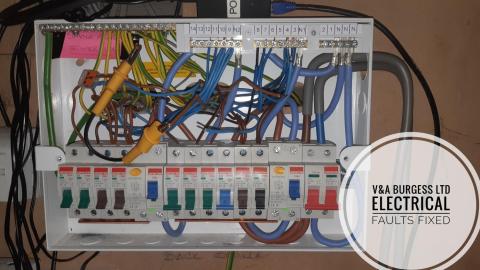
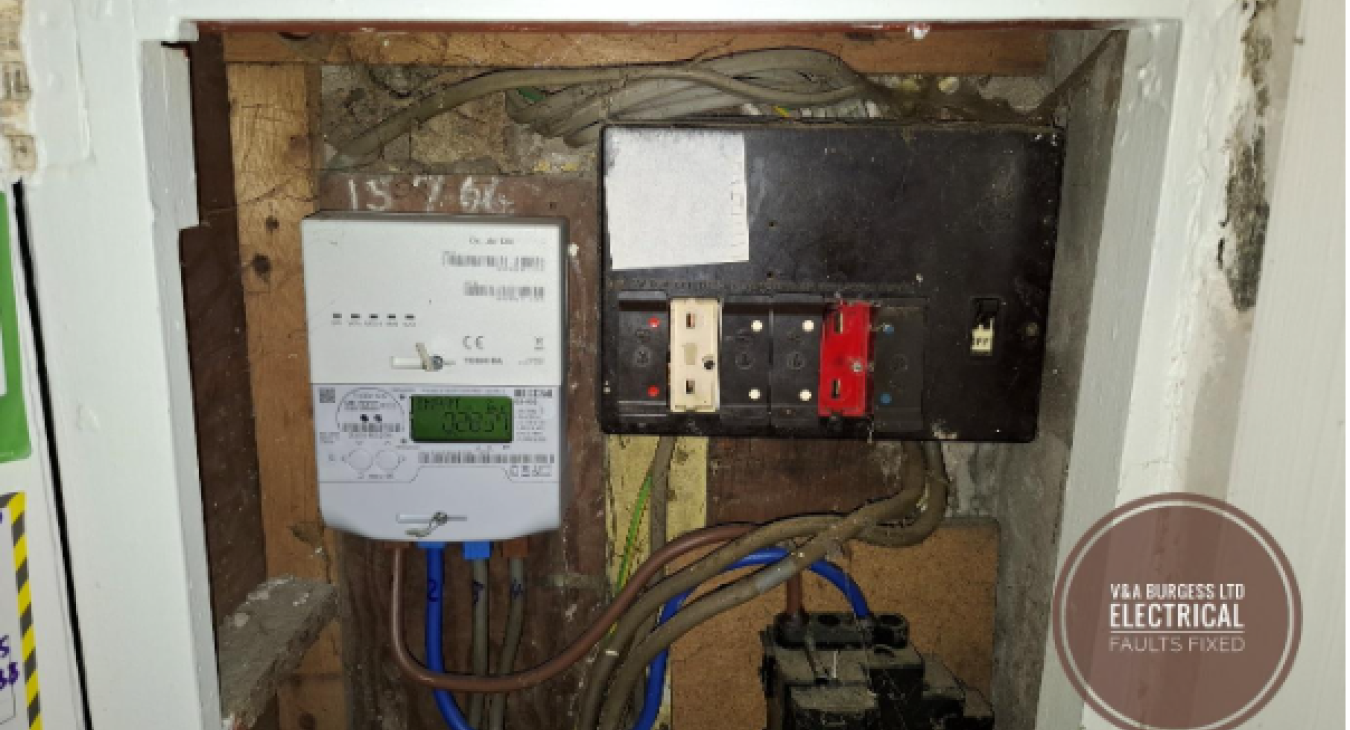
Old fuse boxes may no longer be safe in your home. If you still have a fuse box that contains fuse wire or fuses then this is likely to be outdated and even dangerous. Modern consumer units contain trip switches and in particular a mix of RCD, MCB and RCBO devices. Electrical faults in your wiring can be missed by old fuse boxes which are no longer equipped to deal with modern wiring systems and appliances in use today.
Back to top1) New Consumer Unit

Old fuse boards are no longer able to cope with the power demands, appliances, and modern safety requirements that we have today. In older homes that have not been rewired, you will find older fuse boxes designed to protect electrical installations from many years ago. The best way to achieve peace of mind, proper protection for electrical circuits and safety for you and your family is to have a new Fusebox (now called a consumer unit) installed.

(Photo: Modern Fuse Box Equipment, Surge Protection and RCBO)
Back to top2) Electrical Installation Condition Report
When installing a new consumer unit onto old wiring, a whole host of problems can appear that did not seem to be present with your old fuse box. This is because an outdated fuse box contains outdated technology incapable of detecting such faults. Modern units contain RCD (residual current devices), Surge Protection, RCBOs and / or AFDD (Arc Fault Detection Devices). This combination of new technology allows for the modern safety standards to be met and gives the best protection against all types of electrical faults.
Before installing a new consumer unit, it is imperative that a periodic electrical inspection is carried out. This inspection process looks at the whole electrical system including:
- Earthing
- Cable Insulation Quality
- Circuit Resistances
- Condition of sockets and switches
- Mains Supply Condition
and much more.
The document produced following a Periodic Electrical Inspection is called an Electrical Installation Condition Report.
Back to top3) What does an EICR contain?
The contents of an EICR will give a detailed overview of the condition of the home's electrical system. It will highlight:
- Electrical work that needs to be carried out
- Contraventions of Electrical Regulations
- Risk of Electrical Shocks
- Any discrepancies between your system and current standards of safety
The EICR should contain some observations. These observations will include a severity code which your electrician has applied to each situation. Codes range from dangerous situations through to recommended safety improvement in line with the current regulations.
Back to top4) Older Style Fuse Boxes and Electrical Shock Risk
One of the main issues with older style fuse boxes is the level of protection they offer against electrical shocks. Modern fuse boxes contain devices which provide additional protection against electrical shocks such as RCD, RCBO and AFDD devices whereas older fuse boxes rely on earthing alone to disconnect the power supply in the event of a fault.

(Photo: 1930s to 1950s Wooden Fuse Box with Fuse Wire and Asbestos)
Back to top5) Tell-Tale Signs your Fusebox is not safe!
There are a number of signs to look for when considering if your current fuse box is safe. Electrical safety standards change continuously to keep up with changes in technology, electrical system demands and to offer better protection against electric shocks.
- Burning Smells
- Asbestos Flash Guards
- Fuses Blowing
- Flickering Lights
- Intermittent Power Cuts
- Plastic Covers on Fuse Box
5.0.1) Burning Smells
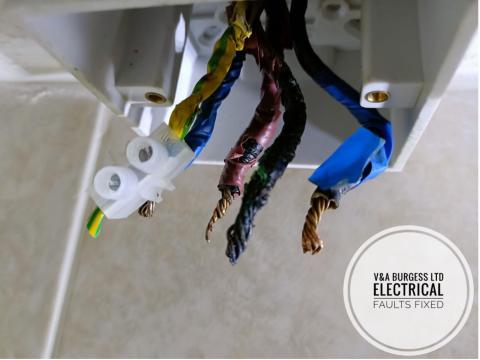
If you can smell a fishy, plastic, or chemical smell from your fuse box, there is a strong likelihood that there is or has been an electrical fire inside the box.
FIX Turn the power off immediately and consult a qualified electrician near to you to investigate the issue.

(Photo: Burnt Connections inside the Consumer Unit)
5.0.2) Asbestos Flash Guards
Some old rewireable fuse boxes have asbestos flash guards which help to dissipate heat and prevent fire when fuses blow. Whilst these are reasonably effective, asbestos is now known to be a very dangerous material.
FIX Have a local electrician come and carry out a safety check / EICR to establish the condition of your wiring. These old fuse boxes were only ever installed on old systems which means that your electrical wiring is also very old.
5.0.3) Fuses Blowing

(Photo: Evidence of Fuse Wire Fuses Blowing)
Fuses that blow regularly indicate that you have an electrical fault such as short circuits, are overloading the circuits regularly or have dangerous wiring. Whatever the cause of fuses blowing, it needs immediate investigation due to the risk of electrical fires. You can see the black marks on the fuse holders above indicating regular blowing of fuses.
FIX There is no substitute for electrical safety inspections by a qualified and competent professional electrician. We can carry out such inspections for you with our vast array of experience and cover a wide area.
5.0.4) Flickering Lights
When lights flicker it can often be a one-off, a disruption in the incoming power supply or perhaps large electrical equipment locally beginning to power up. If you notice that your lights are flickering more often, this is a sign of electrical problems.
FIX If just one of your lights is flickering, consider changing the bulbs. If you have a dimmer switch, make sure that BOTH your bulbs and your dimmer switch are compatible with each other. Consult an electrician if you are unsure.
5.0.5) Intermittent Power Cuts
Intermittent power cuts are not a common occurrence unless you live in a very rural location. They can indicate that a new fuse board may be required, that there are problems with the mains supply or an almost limitless list of other issues.
FIX Have an electrical check carried out and describe the problems you are having with your electrician.
5.0.6) Plastic Covers on Fuse Box

(Photo: A plastic consumer unit that caught fire)
Many fuse boxes and consumer units were of plastic construction and this is not necessarily dangerous. If however, your fuse box is comprised of fuses or fuse wire and is also plastic then it may be a fire risk. These days, consumer units are manufactured out of non-combustible material (usually metal) and contain either miniature circuit breakers or preferably RCBO devices.
FIX The right electrician should advise you what is best for your electrical needs in your property. A consumer unit is recommended but with outdated electrical systems, an electrical check is recommended beforehand to prevent unforeseen problems.
Back to top6) Conclusion
Old fuse boxes may not be safe and should be upgraded often. If your existing fuse box is over 20 years old then it may not have adequate electric shock protection and you should consult an electrician for further advice in your situation. Rewirable fuses no longer offer the right protection for modern homes and installing a new unit with trip switches and RCD protection is the best way forward.
Back to top